Thursday, October 17, 2024

The Rich /Poor Gap Keeps Growing - Money Seems Never Enough


You see, if you can’t make money, why pretend to be superior?

This is a simple yet powerful question, one that speaks directly to the heart of many people’s struggles with wealth. Often, we equate financial success with personal worth, creating an illusion of superiority.

However, the truth is, money is just a tool, an essential part of the human experience, but not the ultimate measure of success or value.

In our society, there’s a pervasive belief that money is the key to happiness. We work tirelessly, chase after promotions, and take on more than we can handle — all in the name of financial success. Yet, no matter how much we accumulate, it often feels like it’s never enough.

There’s always another goal, another level to reach. But what if we are looking at money all wrong?

Don’t Be Arrogant About Money

It’s easy to fall into the trap of arrogance when we have wealth. We might believe that having more money makes us more important or that it validates our status in society.

But here’s the thing: money doesn’t define who you are.

It’s simply a resource, a tool you use to navigate the material world. Pretending to be superior because of your financial situation only distances you from the truth that wealth is about how you use money, not how much you have.

Everyone, don’t be arrogant.

Whether you have little or a lot, money itself is not the problem. It’s the attitude you hold toward it. If you’re focused solely on accumulating more wealth without understanding its purpose, you’ll find yourself on an endless chase.

Money is important, yes, but not in the way society often tells us.

It’s not just about earning and spending; it’s about how we channel it to serve a greater purpose.

Money as a Tool for Flow

The key to understanding money is seeing it as something fluid, something that’s meant to flow. Personally, I have come to see money as a form of energy, one that should be used to enhance life — not just for oneself, but for others.

If you hoard it, if you are greedy, it stagnates. It loses its potential to create, to benefit, and to transform lives.

In my experience, the more you try to hold onto money tightly, the more elusive it becomes.

It’s like trying to hold water in your hands — squeeze too hard, and it slips through your fingers. But if you let it flow, if you allow it to pass through your life, it will multiply.

You become a channel for wealth, not its owner.

This shift in mindset is crucial. Instead of thinking about how much you can gather for yourself, think about how much value you can create and how many people you can uplift with your resources.

When you adopt this approach, you won’t find yourself lacking.

Why?

Because money, like energy, responds to movement. When you keep it flowing — when you invest in others, in your community, in the world — it returns to you, often in greater amounts. ..Cash Flows !

You won’t be poor because your wealth is in constant motion, benefiting more people, contributing to society, and making a larger impact on the world.

The Importance of Intention

It’s not just about letting money flow, though.

It’s also about the intention behind it. If you use money solely for self-gain, you limit its power. But if you use it to benefit others, to contribute to something larger than yourself, you unlock its true potential. This is where many people get stuck.

They think, “If I have more, I’ll be happier,” but the reality is that fulfillment comes from the act of giving, not receiving.

I often say that we’ve long passed the era of survival mode, where the goal was simply to have enough to meet basic needs.

Today, wealth is about impact.

It’s about how much good you can do with what you have. Real wealth is not measured by the numbers in your bank account but by the lives you touch and the difference you make.

If you are a conduit for wealth, money will find its way to you because you are using it for a greater purpose.

You are no longer focused on accumulation for accumulation’s sake, but on how you can help others. This shift in focus is where true financial freedom lies.

It’s not about having enough to stop worrying about money but about reaching a point where money is simply a tool you use to fulfill your larger mission in life.

Wealth and Generosity

You might ask, “But what if I don’t have much to give?”

It doesn’t matter how much you start with. The principle remains the same. Whether you have a little or a lot, the act of giving — whether through time, knowledge, or resources — creates a flow of abundance.

Generosity, in any form, activates the cycle of wealth. The more you give, the more you receive because you are aligning yourself with the natural flow of energy.

Remember, you don’t need to be rich to start this process. You simply need to have the right mindset.

As you begin to give more, you’ll notice that money starts flowing back to you in unexpected ways. It’s not magic; it’s the result of aligning your financial actions with your purpose.

You’ll discover that the wealth you create is sustainable because it’s rooted in a desire to uplift others, not just yourself.

A Vow to Serve

The most important takeaway here is this:

“ Wealth is not about how much you have but about how you use it. If your goal is to accumulate wealth for personal gain, you will always feel like money is never enough. But if you shift your mindset, if you see money as a tool for serving others, you’ll find that you are never without.”

…..Dwayne Anderson

The key is to make a vow — a commitment to use your wealth, however much you have, to make a positive impact.

When you do this, you activate a force stronger than any external pressure: your will. Willpower, combined with generosity, can overcome any obstacle, including financial ones.

So, don’t let money control you. Instead, use it wisely, let it flow, and watch how it transforms your life and the lives of those around you.

In the end, you’ll find that wealth is not something to hoard but something to share. When you become a channel for money, it will always find its way back to you, in ways you never imagined.

Share this article to those you love , do support Dwayne’s Trumping Richer Once Again: Money Seems Never Enough at #Amazonkindle .

In a World Where Time Is Money

 The Power of Owning Your Time

It is the worth of time that is frequently neglected in discussions about riches. This is the one item that is frequently disregarded. It is common knowledge that “time is money,” but what exactly does this adage actually mean?

Within the framework of the traditional economy, the majority of people make their income by selling their time. After putting in a predetermined amount of time at work, you are rewarded with monetary compensation.

The wealthiest people and the most successful enterprises, on the other hand, are aware that the real secret to earning wealth is not selling your time but rather owning it.

Let us dissect it in detail.

You are exchanging a limited resource — your time — for a predetermined sum of money whenever you sell your time. This is true regardless of whether you are selling your time through a salaried employment, hourly work, or freelance gigs.

There are only a certain number of hours in a day, and regardless of how hard you work, the amount of money you can make is restricted by the number of hours you are able to sell. That is why so many people, even when they are exerting a lot of effort, feel like they are trapped. Their income never increases beyond a certain point, despite the fact that they are continuously exchanging their time for money.

Consider the way that wealthy people conduct their lives. They are not selling their time; rather, they are purchasing assets that increase in value over the course of time. Real estate, equities, enterprises, or, more recently, digital assets such as cryptocurrencies or non-fungible tokens (NFTs) could fall into this category.

The owner of these assets does not have to spend their time in order to produce revenue because the assets generate income in a passive manner. Instead, their investments work for them, which enables them to concentrate on other things, such as increasing the amount of assets they own or devoting more time to the activities that are most important to them.

Selling Time vs. Owning Time
One of the most important distinctions in the process of accumulating money is the contrast between selling time and owning time versus renting time.

If you are selling time, you are constantly playing catch-up with other people. Even though you are working harder and harder, the amount of money you make is still contingent on the number of hours you are able to put in. This results in a loop in which the more you work, the more you need to work in order to keep up with your lifestyle without going into debt.

You are able to break free from this pattern, however, when you own your time. You are not exchanging your time for money; rather, you are investing in assets that grow on their own, regardless of the amount of time you put in. Passive income is the ability to produce money while you are sleeping, traveling, or engaging in other activities that you enjoy. This is the cornerstone of passive income.

You do not have to stop working just because you own time. It is true that one’s work can be an important and satisfying component of one’s life. However, when you own your time, you are able to select how and where you spend your time, which gives you more flexibility. Because you no longer require the income from your employment, you are no longer bound to it. Rather than that, you work because you want to or because it is a component of the construction of something more substantial.

Why Money Loves Speed: The Speed at Which Wealth Is Acquired
In the process of accumulating wealth, one of the most essential lessons to learn is that money is a fan of speed.

When it comes to the digital economy, opportunities change swiftly, and those who are able to respond quickly are frequently the ones who see the greatest returns. This is especially true in the realm of digital assets such as cryptocurrencies and non-fungible tokens (NFTs), where prices can see significant surges and falls in a relatively short amount of time.

The wealthy are aware that the speed with which they respond to chances can determine whether they receive a modest return or a gain that can completely transform their lives. When it comes to optimizing returns, speed is frequently the most important factor. This is true whether one is investing in a business, purchasing digital assets, or getting an early start on a new technology. The reason for this is that those who are able to move more quickly than those who are forced to sell their time for money are those who own assets and have access to capital. They have the ability to take action whenever chances present themselves.

When it comes to the digital economy, the proliferation of blockchain technology and decentralized financing (DeFi) has made it possible to act more swiftly and seize opportunities in new ways. It is possible for individuals who are aware of the significance of speed to capitalize on the rapidly evolving digital world. This can be accomplished by activities such as trading cryptocurrencies, investing in new non-fungible token initiatives, or taking part in decentralized finance protocols.

Taking Control of Your Time
In other words, how does one get from selling time to actually owning time? The solution lies in the accumulation of assets. It is possible that this refers to tangible assets such as real estate or enterprises; however, digital assets such as bitcoin, non-fungible tokens, or tokenized real estate are becoming increasingly prevalent.

Tuesday, October 15, 2024

Escalating Korean Tensions and the Risk of a Chinese Invasion

 A Perfect Storm Brewing in East Asia

Increasing tensions in Korea and the possibility of a more widespread crisis on a global scale
If both North and South Korea were to engage in direct battle tonight, the consequences would be far-reaching, having a dramatic influence on the geopolitics and economics of the entire world that would be felt all over the world. An explanation of each of the possible outcomes is as follows:

Immediate Effects on the Military and Geopolitical Situation
Instability in the Region: A full-scale battle between the two Koreas would bring about instability throughout the whole Asia-Pacific region. Japan and China, two countries that are geographically close to one another, would be need to adopt preventative steps. The United States of America, which is a significant ally of South Korea, may soon become engaged militarily, which would further escalate the situation.

Global Tensions: This conflict has the potential to spark a wider engagement from the international community. Considering China’s significant role and influence over North Korea, it is possible that China will attempt to moderate the situation in order to avoid a protracted battle on its borders. At the same time, the United States of America and other NATO members would be compelled to take action, which would result in increased tensions on a global scale and strained diplomatic relations.

The nuclear weapons that North Korea possesses represents a huge risk should a nuclear conflict escalate. If North Korea were to use nuclear weapons, the destruction that would result would be catastrophic, not just in terms of the number of people who would be killed, but also in terms of the stability of the area and the world as a whole. The possibility of a nuclear escalation would have significant repercussions for the peace of the entire world.

Consequences for the Economy and the Financial System
Crash of Global Markets: A conflict on the Korean Peninsula will quickly upset the financial markets of the entire world. It is highly probable that investors will seek refuge in safe-haven assets such as gold, which might result in large falls in the stock markets in the Asia-Pacific region. The fact that South Korea is a worldwide industrial powerhouse, particularly in the semiconductor and electronics industries, means that disruptions of this nature might have a significant impact on supply chains around the world.

As the United States Dollar continues to strengthen this week , Bitcoin and other cryptocurrencies may experience a surge. When there is volatility on a worldwide scale, investors tend to seek for safe-haven assets, which results in the strengthening of the United States dollar. On the other hand, Bitcoin and other cryptocurrencies, which are frequently considered alternatives during times of uncertainty, can witness huge spikes as investors diversify their holdings away from traditional fiat currencies.

The South Korean economy is strongly dependent on global trade routes, and disruptions in the energy market are a concern. Whenever there is a war, these lines, particularly those that transport oil and gas, would be disrupted. This could result in an increase in the cost of energy, which would put more burden on a global economy that is already delicate.

Extinction of the Conflict: If the conflict continues to grow, it has the potential to bring about a recession in the world economy. Significant disruptions would be experienced by countries that are dependent on South Korean exports, particularly industries related to technology. As a result of businesses’ reactions to growing concerns about the continuation of instability, global trade may slow down.

Possible Repercussions for the Federal Reserve and Other International Policies
There is a possibility that the Federal Reserve and other central banks will need to modify their procedures. In the United States, a decline in economic activity brought on by the conflict in Korea could prompt the Federal Reserve to reevaluate its decision to reduce interest rates, which could lead to the implementation of emergency programs aimed at stabilizing the market. It is possible that China will change its policies in order to deal with the shocks that the conflict has produced in the region.

What Is the Potential Danger of China Invading Taiwan?
While this is going on, China may view the escalating tensions between the two Koreas as a strategic opportunity to take action on its long-standing goal of reunifying Taiwan with the mainland.

To explain why:

Timing that is Strategic
Because the attention of the world is currently concentrated on the situation in Korea, it is possible that the United States will be too preoccupied to give a robust reaction to a military operation taken by China against Taiwan. Over the past few years, China has been increasing the amount of military pressure it exerts on Taiwan by conducting drills and increasing its naval presence in the vicinity of the island.

There is a possibility that the United States’ capacity to defend Taiwan would decrease if the Korean conflict continues to put a strain on the military of the United States. This would provide China with the opportunity to take decisive action. The United States of America and its allies would be confronted with a situation that would be overwhelming, which might perhaps cause them to fail in their responses to several security crises.

Uncertainty in the market and disruptions to the economy
A battle that involves both Koreas and an invasion of Taiwan by China at the same time would send shockwaves through the economy of the entire world. Taiwan serves as an important center for the production of semiconductors around the world. If Taiwan’s semiconductor production were to be disrupted in any way, it would have a disastrous impact on businesses all over the world, ranging from the automotive industry to the technology industry, and it would exacerbate supply chain problems and inflationary pressures.

The markets would be subject to a great deal of volatility. Despite the fact that cryptocurrencies could be subject to panic trading and significant price swings, investors would rush into safe-haven assets such as the United States dollar, gold, and Bitcoin. Depending on the level of mood among investors, the value of cryptocurrencies, which are sometimes seen to be an alternative to regular markets, might either increase or decrease.

American Reaction and Its Implications for the World
If China were to invade Taiwan, the United States would be faced with a difficult option regarding how to strike a balance between providing assistance to South Korea and protecting Taiwan through its military reaction. The Taiwan Relations Act requires the United States to provide assistance to Taiwan; nevertheless, the United States’ military resources may be taxed to their limits, particularly in light of the growing tensions with North Korea.

As a result of this escalation, additional regional players such as Japan, Australia, and the European Union may become involved in the fight. It is possible that a more extensive regional war would break out, which will destabilize the Asia-Pacific area and force global powers to engage in direct confrontation.

As a result, a worldwide crisis is on the horizon.
When combined with an invasion of Taiwan by China, a conflict that involves both North and South Korea at the same time would result in a worldwide catastrophe that has never been seen before. The impact on the economy would be catastrophic, leading to the collapse of global markets, an increase in inflation, and the possibility of a worldwide recession.

The United States of America and its allies would be in a state of scrambling to respond to several conflicts, which would have equally grave geopolitical ramifications. As a result of many flashpoints coming together to form a larger conflict, the globe would be confronted with a hazardous moment that would completely transform both international relations and the economy of the entire planet.

The stakes are extremely high, and the next few hours or days might mark the beginning of a new period of geopolitical and economic upheaval.

Disclaimer: The content in this article is intended for informational and speculative purposes only and does not constitute professional financial or geopolitical advice. The scenarios presented are hypothetical and are based on publicly available information as of the time of writing. Any resemblance to real-world events, predictions, or outcomes is purely coincidental. Readers should exercise caution and consult with qualified experts before making any decisions based on geopolitical or financial situations. The potential risks and outcomes discussed are subject to rapid changes based on evolving global events.

Sunday, October 13, 2024

How China’s Stimulus Could Boost Digital Asset Investments Amid U.S. Political and Economic Uncertainty

Part of China's aim to lessen its reliance on the United States dollar is the recent stimulus measures that the country has implemented. 


These policies include increased debt issuance and fiscal support. On the other side, the United States is in the process of implementing interest rate decreases, which may cause the dollar to weaken and lead to outflows of capital. 

While all is going on, China has four months before the elections in the United States to significantly improve its financial condition.


Rate Cuts in the United States and China's Opportunity to Act

The Federal Reserve of the United States has been lowering interest rates in an effort to combat inflation and prevent a recession. However, these efforts are made more difficult by the political instability that is associated with the forthcoming presidential elections in 2024. 

The absence of a distinct economic agenda on the part of Kamala Harris stands in stark contrast to the possibility that Donald Trump will return to the White House with new ideas to stimulate the economy. It is possible that the markets would face more volatility and may even drift into a recession if Harris assumes office without implementing any concrete measures. 

Because Harris has not presented any real proposals, there is a risk that investors will lose faith , particularly in the current economic context.

China, on the other hand, is in a position to capitalize on this period of uncertainty in the United States by injecting money into its own economy and strengthening the yuan. 

This gives China a strategic edge. 

By taking this action, China has the potential to increase its investments in digital assets, particularly through Hong Kong, which is establishing itself as a worldwide hub for cryptocurrency. China has the potential to attract global investors who are looking for alternatives to the United States dollar, while the market in the United States may remain stagnant due to the lack of clarity around the leadership.

Affect on Bitcoin as well as the United States Dollar
Alternative assets, such as Bitcoin, may become more appealing as a result of the weakening of the United States dollar as a result of rate reduction. 

Investors may choose to invest in digital currencies as a means of protecting themselves from the unpredictability that surrounds the economy and government of the United States. It is possible that Hong Kong's involvement in cryptocurrency investments will continue to expand, with the assistance of China's broader economic initiatives. 

This may potentially attract capital flows into digital assets at a time when the United States is struggling with domestic issues.

A Concluding Statement Regarding the Economic Landscape of the World
Kamala Harris's lack of a clear economic plan could lead to market instability, particularly in the event that the United States enters a recession. 

This is especially true in light of the fact that Trump's proposals may bring momentum to the economy of the United States. 

China, on the other hand, is in a position to capitalize on a window of opportunity to strengthen its economy, lessen its reliance on the United States dollar, and encourage investments in digital assets, thereby establishing itself as a more powerful participant in the ever-changing global economic scene.

Thursday, October 10, 2024

How Hurricane Milton and Federal Reserve Actions Could Impact the U.S. Economy and Bitcoin


The Looming Financial Storm 3 

How Hurricane Milton and Federal Reserve Actions Could Impact the U.S. Economy and Bitcoin

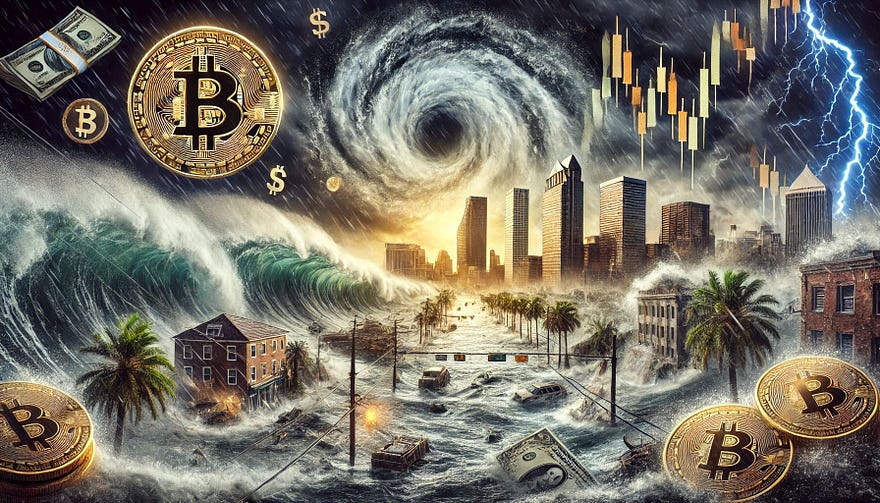
The aftermath of Hurricane Milton, which has caused considerable devastation across the state of Florida, notably in Tampa, has made the economic picture for the United States of America more complicated. The combination of this natural calamity with the most recent statistics on the consumer price index offers a one-of-a-kind set of issues for the Federal Reserve as well as for investors.


Price Index Data and Rate Cuts by the Federal Reserve
Consumer prices in the United States increased by a marginal 0.2% on October 10, which is an indication that inflation is beginning to moderate. The possibility of the Federal Reserve cutting interest rates has been opened up as a result of this development. This might give the economy with some short-term relief by reducing the costs of borrowing money. 

On the other hand, lower interest rates can also have the effect of weakening the United States dollar, which makes alternative assets such as Bitcoin more appealing as a hedge against currency deficiency. 

Due to the minor depreciation of the dollar, conditions that are beneficial for cryptocurrencies have already manifested themselves.


The Influence of Hurricane Milton on Global Markets
On the other hand, the aftermath of Hurricane Milton adds an additional degree of uncertainty to the situation. The hurricane, which struck Tampa with wind gusts that exceeded 100 miles per hour, has resulted in extensive power outages and severe damage, particularly in the areas of infrastructure and real estate. 

As a result of the roof being pulled off, Tropicana Field, which is the home stadium of the Tampa Bay Rays, sustained significant damage. This serves to show the tremendous impact that was felt throughout the region. Because more than a million people are still without power and because of the catastrophic floods that occurred in St. Petersburg, it is anticipated that the economic toll will approach billions, which will put pressure on the insurance industry and weaken market mood.

How the Market Reacted
As investors weigh the possible benefits of interest rate decreases against the severe economic disruption caused by Hurricane Milton, the stock market in the United States may experience volatility in the weeks ahead.

 While the Federal Reserve may continue to reduce interest rates, the economic devastation that has occurred in Florida may dampen investor enthusiasm for stocks in the United States, particularly in industries that are connected to the region that has been affected.

In the meantime, Bitcoin and other cryptocurrencies can profit from the uncertainty that is currently present. 

The United States dollar is seeing a slight decline, and the economic impact of the hurricane is increasing. As a result, investors may be looking for other assets to protect themselves from the volatility of the market. 

The current atmosphere may provide a boost to the price of Bitcoin, particularly if investors are looking for protection from both natural and economic disasters. Bitcoin has historically flourished during times of uncertainty, and this current scenario may provide such help.

Concluding Remarks: Dealing with Two Disasters
In a nutshell, the economy of the United States is currently dealing with two pressing issues: the possibility of additional rate cuts from the Federal Reserve and the immediate impact of Hurricane Milton. The Federal Reserve may be able to reduce interest rates based on the most recent CPI statistics; but, the extensive economic damage caused by the hurricane may restrict market gains. It is conceivable that investors will navigate these uncertainties by diversifying their holdings into alternative assets such as Bitcoin, which may experience a rise in value as the dollar continues to decline and market instability continues to worsen.

In the following months, it will be essential to evaluate how these two crises — both financial and natural — will influence the economy of the United States of America and the markets throughout the world.

Wednesday, October 9, 2024

Tokenization and the Metaverse

 Acquiring Expertise in Digital Ownership in the Era of Web3

Tokenization and the Metaverse 

Tokenization and the Metaverse: A New and Comprehensive Guide to the Metaverse


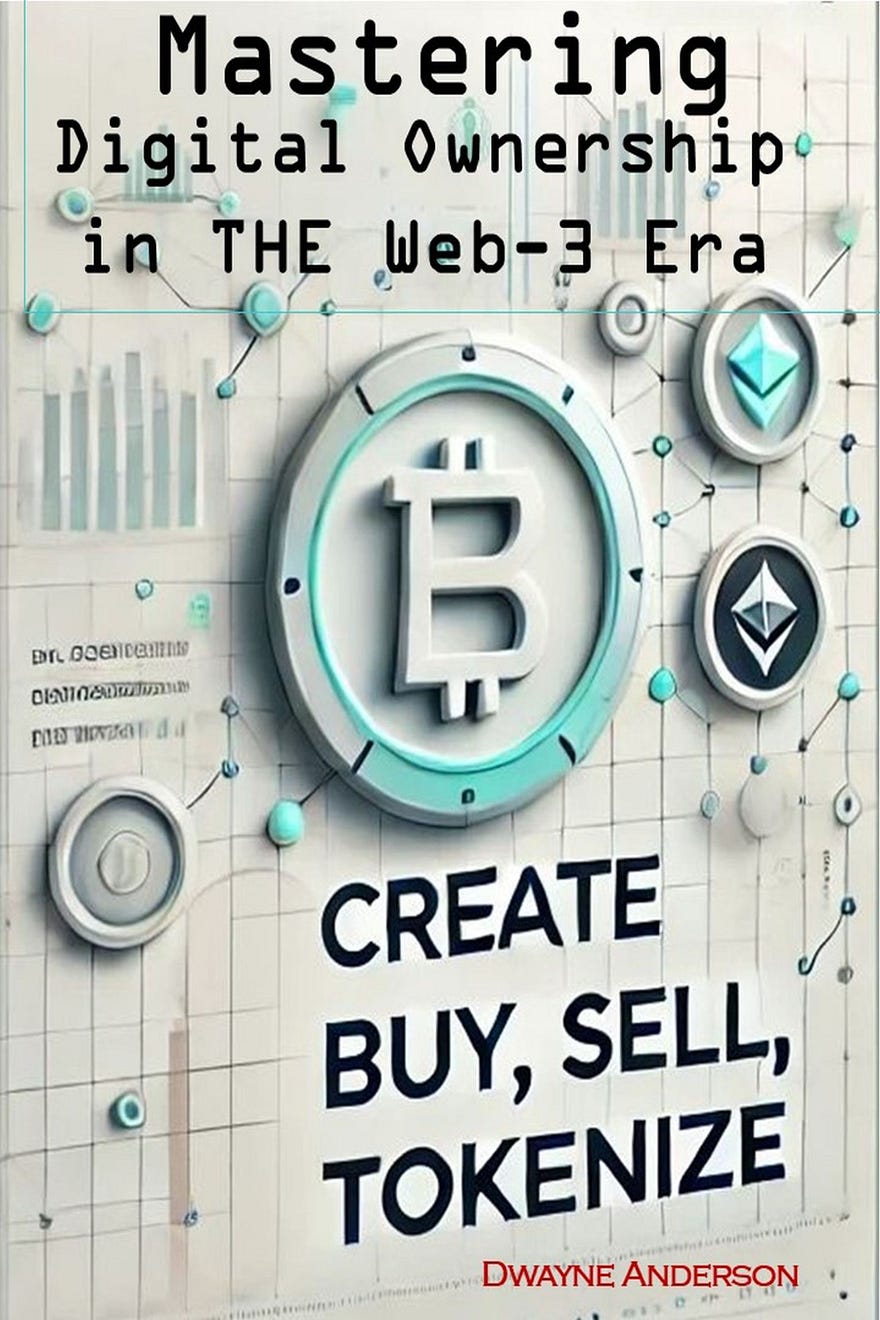
The author, who has previously offered ideas on Medium, has now delivered a more concentrated narrative with the publication of Mastering Digital Ownership in the Web3 Era. 

This book is the product of nearly a year’s worth of in-depth research that the author has conducted. The information contained in this book is an essential update for anyone who has been following developments in the metaverse, non-fungible tokens (NFTs), and tokenization of digital assets. It provides a straightforward path to comprehending and capitalizing on the opportunities that exist in these areas.

Prior efforts, including a variety of literature, have provided the author with a basis for comprehending digital ownership, virtual economies, and crypto assets. 

These efforts have contributed to the enrichment of the author’s trip. Condensing and expanding on those foundations, this new book takes readers deeper into the advanced realms of tokenization and its role in defining future industries and investment opportunities. It does this by providing a further examination of the topic.

The book covers a number of important developments, including: 

The Development of the Metaverse
A more nuanced comprehension of virtual worlds is presented in this book, which goes thoroughly into the most recent developments in the metaverse. This study, in contrast to past editions, focuses on the ways in which the metaverse has expanded beyond the realm of gaming and entertainment to cover a wider range of industries, including education, retail, and real estate, among others. The realms of real-world reproductions and immersive experiences in the metaverse, which were long considered theoretical, are now becoming tangible and expanding industry sectors.

NFTs and the Ownership of Digital Assets
In previous publications, non-fungible tokens (NFTs) were mostly examined in relation to digital art and collectibles. However, Mastering Digital Ownership in the Web3 Era takes things a step further by investigating how NFTs are being incorporated into business structures, loyalty programs, and even digital identities. These tokens represent more than just ownership; they give utility, brand engagement, and investment opportunities. It discusses how firms like Adidas and Nike are leveraging NFTs to offer exclusive product access. Additionally, it illustrates how these tokens represent more than just ownership.

The Tokenization of Digital Assets: The Future of the Industry
The emphasis that this new work places on tokenization is the most important change that it contains. The tokenization of both physical and digital assets is becoming increasingly important to the functioning of Web3 economies, as the book sheds light on. It describes the process by which tokens are being used to tokenize real estate, luxury goods, intellectual property, and even services, which enables fractional ownership and decentralized exchange.

It is emphasized throughout the book that cryptocurrency tokens will be the driving force behind the future of financial markets, and that large organizations such as BlackRock are already investigating the possibilities. This section presents a forward-looking study of the ways in which businesses and investors might get ready for the advent of tokenized assets.

 A practical guide on making, purchasing, selling, and tokenizing is provided by the author’s insights. This guide is written in a way that is accessible to newbies while yet providing information that is instructive for experienced investors.

Complementing the Work Done Previously
The previous study is not disregarded in this new book; rather, it is expanded upon. The foundation was set by the prior articles published on this publication , which provided readers with an understanding of the fundamentals of non-fungible tokens (NFTs), metaverse involvement, and virtual trading. 

Along with this release, the author offers a detailed update that fills in the gaps that were left by those initial discoveries. This update provides more structured direction for traversing the Web3 environment.

Readers who are looking for practical applications and investment opportunities in the rapidly developing digital economy will find that the inclusion of passive income strategies in the metaverse, trading virtual assets, and making copies in virtual worlds adds value to the content.

The conclusion is that anyone who is interested in understanding the future of digital economies should read Mastering Digital Ownership in the Web3 Era. 

This book is a must-read for future investors. Through its in-depth investigation of non-fungible tokens (NFTs), the metaverse, and the tokenization of cryptocurrency, it offers a road map that may be utilized by both individuals and organizations. 

Simplifying difficult ideas into easily understandable insights makes this book a useful resource for both newbies and veterans of the field. This ensures that it will continue to function as a reference guide as these technologies continue to advance beyond their current state.

Investing Beyond AI: Exploring Kinmen's Lifestyle and Land Potential.

When the world is racing toward faster computing, perhaps what we really need is somewhere to slow down. As AI Drives Taiwan's Economy t...