Showing posts with label blackfriday. Show all posts

Wednesday, June 11, 2025

Growth Mindset and Resilience


Growth Mindset and Resilience: Building a Stronger  growth mindset, as championed by Dr. Carol Dweck, is incredibly important, especially when viewed through the lens of your previous discussion on the value of money and the stark realities of poverty.

Here’s a justification for its importance:

Overcoming Adversity and Poverty: Your narrative vividly describes extreme poverty — the lack of food, clothes, and shelter. A fixed mindset might lead individuals in such circumstances to believe their situation is unchangeable, that they are inherently “poor” or “unlucky.”

growth mindset, however, fosters the belief that abilities and intelligence can be developed through dedication and hard work. For someone experiencing poverty, this means believing in the possibility of improving their circumstances, learning new skills, finding opportunities, and persevering despite immense challenges. It shifts the focus from “I can’t” to “How can I?” or “What can I learn to change this?”

Financial Literacy and Economic Mobility: Understanding the “value of money” isn’t just about appreciation; it’s about managing it effectively. A growth mindset is crucial for developing financial literacy. It encourages individuals to:

  • Learn: Instead of thinking “I’m bad with money,” they’ll seek to understand budgeting, saving, investing, and earning strategies.
  • Adapt: Economic landscapes change. A growth mindset allows people to adapt to new job markets, learn new skills, or even start small businesses, seeing failures as learning opportunities rather than definitive setbacks.
  • Innovate: In challenging environments, a growth mindset encourages creative problem-solving to generate income or resources where traditional avenues may be limited.

Building Self-Worth and Resilience (Beyond Money): Your narrative rightly distinguishes between self-worth and financial status. A growth mindset is foundational to healthy self-worth because it internalizes the idea that one’s value comes from effort, learning, and personal development, not just external achievements or possessions.

Resilience: When facing setbacks (like job loss, financial hardship, or failed ventures), a fixed mindset can lead to feelings of hopelessness. A growth mindset views these as opportunities to learn, adjust strategies, and bounce back stronger. This resilience is vital for maintaining self-worth in the face of adversity, preventing money from becoming the sole determinant of a person’s perceived value.

Personal Growth: It encourages continuous self-improvement, fostering a sense of accomplishment and competence that is independent of one’s bank account balance. This internal validation is critical for a robust sense of self-worth.

Challenging Societal Perceptions: The idea that a person’s self-worth can be damaged by linking it to money and fame is a powerful point. A growth mindset directly counteracts this by emphasizing internal development over external validation. It teaches that one’s worth isn’t static or dependent on others’ perceptions or financial success, but rather on their capacity to learn, grow, and contribute.

In essence, while money provides the means for basic needs and comforts, a growth mindset provides the internal engine for individuals to pursue, manage, and leverage those means effectively, adapt to life’s inevitable challenges, and build a strong sense of self-worth that is independent of their financial circumstances.

It’s the psychological bedrock that allows individuals to navigate the complexities of life, including economic hardship, with hope, agency, and a continuous drive for betterment. The concept of a “growth mindset,” as developed by Carol Dweck, is incredibly important because it fundamentally shifts how individuals perceive their abilities, challenges, and ultimately, their potential for success. Justifying its importance in the context of the previous discussion about the value of money and self-worth highlights several key areas:

  1. Overcoming Perceived Limitations and Poverty:
  • Fixed Mindset and Poverty: The narrative describes extreme poverty where individuals are “forced to shift from one temporary place to another,” implying a lack of agency and a feeling of being stuck. A fixed mindset, which believes abilities and circumstances are static, can be deeply ingrained in such environments. If one believes they are inherently “bad with money” or “destined to be poor,” they are less likely to seek solutions or even try to improve their financial situation.
  • Growth Mindset as a Catalyst: A growth mindset counters this by fostering the belief that one’s abilities, including financial literacy and problem-solving skills, can be developed. For those facing poverty, this means viewing a lack of money not as an unchangeable fate, but as a challenge that can be addressed through learning, adapting, and persistent effort. While systemic issues of poverty require systemic solutions, a growth mindset empowers individuals within those systems to seek opportunities, learn new skills, and make better financial decisions. It provides the internal resilience to “keep going” despite immense setbacks.

Financial Literacy and Management:

  • The previous discussion highlights money’s “utility” and its role in “satisfying day-to-day needs.” Financial management is a skill, and like any skill, it can be learned and improved.
  • Learning from Mistakes: A growth mindset encourages seeing financial mistakes (e.g., poor spending habits, failed investments) not as proof of inherent incompetence, but as valuable learning opportunities. Instead of giving up after a setback, someone with a growth mindset will analyze what went wrong, adjust their strategies, and try again. This is crucial for developing sound financial habits over time.
  • Adapting to Change: The world of money is constantly evolving. New tools, investment opportunities, and economic challenges emerge. A fixed mindset would resist learning new financial strategies, sticking to outdated methods. A growth mindset embraces continuous learning and adaptability, allowing individuals to navigate complex financial landscapes more effectively.

Building True Self-Worth (Beyond Money and External Validation):

  • The narrative explicitly states, “A person does not base their self worth on the expectations of others and their financial status in society.” This is where the growth mindset is paramount.
  • Internal Validation: A fixed mindset often ties self-worth to external achievements, praise, or innate talent. If money or fame are seen as the ultimate markers of success, failure in these areas can be devastating to self-esteem. A growth mindset shifts the focus from “proving oneself” to “improving oneself.” It emphasizes effort, learning, and progress, which are internal metrics.
  • Resilience and Embracing Challenges: When self-worth is rooted in the belief that abilities can grow, challenges are viewed as opportunities for development, not threats to identity. This fosters resilience — the ability to bounce back from failures and setbacks, which are inevitable in life, regardless of financial status. If a person’s financial situation is struggling, a growth mindset helps them view it as a solvable problem they can work on, rather than a personal failing that diminishes their value.
  • Authenticity and Growth: By detaching self-worth from external outcomes like wealth, individuals with a growth mindset are free to pursue their passions, learn new things, and evolve, simply for the sake of growth and personal fulfillment. This leads to a more authentic and resilient sense of self, one that isn’t easily swayed by the ups and downs of external circumstances, including financial ones.

In essence, while money provides external resources and fulfills material needs, a growth mindset provides the internal resources necessary to acquire, manage, and leverage money effectively, and more importantly, to build a robust sense of self-worth that is independent of one’s financial standing. It empowers individuals to take agency over their lives, learn from challenges, and continually strive for personal and financial improvement, regardless of their starting point.

Friday, May 16, 2025

Money Loves Speed- It's Not Just About Going Fast – It's About Being Smart


Buckle Up for 2025's Go-Go Economy

 Money Loves Speed,” is like a super fun and friendly guide to how everything moves so fast these days, especially when it comes to money.

Think about it: if you even blink, you might miss out on the next big thing, right?

And in today’s world, missing out on opportunities can mean missing out on some cash.

That’s the vibe of this book — it’s a lively and quick look at how tech, what’s cool in culture, the world of business, and even our own personal finances are all zooming along at lightning speed.

Dwayne takes you on this crazy adventure through the economy of 2025, where timing is everything for your wallet. Whether you’re juggling side gigs, obsessed with TikTok trends, or just trying to keep up with life in general, this book breaks down all the craziness with a good dose of humor, some smart insights, and plenty of laugh-out-loud moments.

You’ll get the lowdown on how AI is pretty much running the show now (and sometimes totally goofing things up!), how those silly avocado pool floats suddenly became a must-have, and how a random savings challenge on TikTok helped people save a whopping $1 billion in just one month. Seriously, it’s a wild ride, and Dwayne is your friendly tour guide through it all.

The book has some really cool parts, like:

  • Corporate Cheetahs: This talks about big companies racing to stay ahead of the game… and sometimes hilariously tripping over themselves in the process.
  • When Speed Trips: Get ready for funny stories, like the time someone told Siri to “save $100” and accidentally lost $1,000 instead! Oops!
  • Speedy Savings and Swift Spending: This section looks at how we handle our money when everything is happening so fast — even those late-night impulse buys, like that glow-in-the-dark toaster you never knew you needed.

But it’s not just about going super fast all the time. Dwayne also talks about knowing when to take a breath. He shares some smart tips on how to work smarter in our always-connected world, like how a huge 70% of companies worldwide are now using hybrid work (thanks, McKinsey!), and how students in India are picking up new skills twice as fast using VR (according to the Economic Times).

He even mentions how 2 million people in Sweden are consciously cutting back on screen time to clear their heads — they call it “Mindful Tech” (The Guardian told us about that!).

Globally, the book touches on some cool stuff too, like how digital nomads in South Africa are bringing half a billion dollars into their economy, and how Kenya’s M-Pesa 2.0 is helping 10 million people move their money faster than ever.

Oh, and get this: Hinge hosted 30 million video “speed dates” in just one year! Yeah, that’s a thing (TechCrunch reported it).

This book isn’t just full of facts and serious advice — it’s got a ton of personality!

You’ll find little animated money bags cheering you on, some truly ridiculous shopping stories (yes, the toaster makes another appearance!), and a good amount of humor about a world that never seems to slow down.

If you’re an entrepreneur, a dreamer, someone who’s always hustling — or even if you’re just trying to keep your head above water in this super-fast-paced world — this book is totally for you.

It’s not your typical boring finance book.

It’s energetic, funny, and packed with clever ideas to help you do well in a world that’s always on the go.

So, buckle up, bring your sense of humor, and get ready to learn how to make speed your secret weapon!

Thursday, February 27, 2025

Altcoins Will Popping  In March — Here’s Why

What’s Happening in Crypto Right Now?

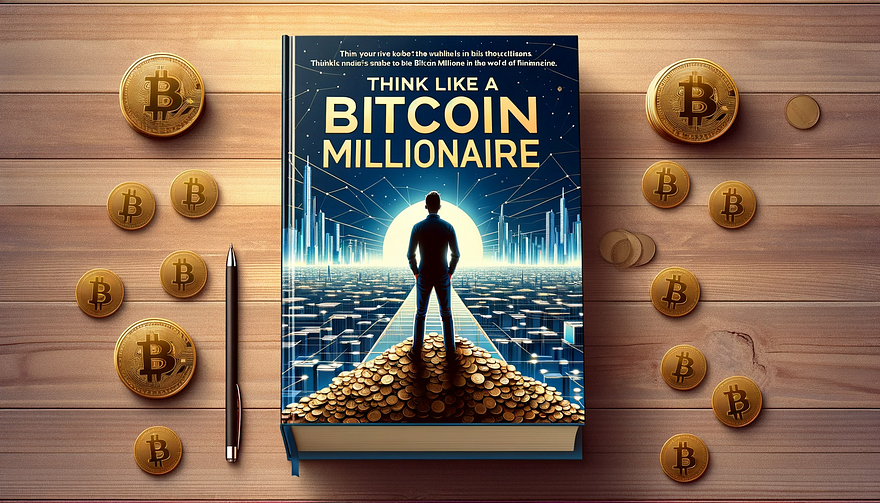
Think like a bitcoin millionaire 

Alright, so if you’ve been paying attention to crypto lately, you’ve probably noticed there’s a lot going on. Bitcoin isn’t the only game in town anymore — it feels like altcoins are starting to grab the spotlight slowly but spped will pick up in March 

Let me break it down for you in a way that makes sense.

Bitcoin’s Losing Its Edge — Could Altseason Be Coming?

Bitcoin dominance — basically how much of the entire crypto market belongs to Bitcoin — peaked back in early February but has been sliding ever since. When Bitcoin dominance drops, it usually means people are shifting their money into other coins. Think of it like this: Bitcoin is the big, steady older sibling, but sometimes investors get bored and want to play with the younger, flashier kids — aka altcoins. There were 2 false rally in February and quite many retail were sunk in hoping for ATH ,even Until today , but if he if it is not going higher after this month, they will start to rotate while facing the decline, which is still happening , Aka $84K , and there is a gleam line at $79 To $74K

And here’s what’s interesting: Even though the overall market has been kind of shaky, some altcoins are holding strong — or even outperforming Bitcoin. That’s a pretty good sign that something might be brewing. Historically, when Bitcoin dominance falls, we often see what people call “altseason” — a period where smaller coins really take off. 

Could we be heading there again? Maybe. It’s worth keeping an eye on.

Bitcoin ETFs Are Bleeding Cash — Where’s It All Going?

Now, here’s another piece of the puzzle: Bitcoin ETFs (those investment funds that let people buy into Bitcoin without owning it directly) have been losing cash — like, a lot of cash. Just the other day, over $750 million flowed out of these ETFs in a single day. That’s a huge chunk of change, and it tells us that institutional investors — the big players with deep pockets — are getting nervous about Bitcoin right now.

If they’re pulling out of Bitcoin, where’s that money going? 

Good question. 

Some of it might be moving into altcoins, while other funds could be parked in stablecoins like Tether (USDT) until the market clears up. If Bitcoin keeps stalling, we might see even more capital flowing into altcoins, which could fuel a rally. 

So yeah, keep your eyes peeled.

Nvidia’s AI Boom vs. Trump’s Tariff Bombshell

Meanwhile, over in traditional markets, things are just as wild. On one hand, Nvidia — a company everyone loves because of its role in AI tech — just crushed its earnings report. Normally, that would send stocks soaring, right? 

But guess what? 

The market didn’t react much. 

Why? 

Because Donald Trump decided to drop a bombshell: He slapped 25% tariffs on goods from the European Union.

This move wiped out half a trillion dollars (yes, trillion ) from global stock markets overnight. 

Crazy, right? When stuff like this happens, investors start looking for alternatives — and that’s where crypto comes in. 

People often turn to crypto as a hedge against uncertainty in traditional markets. With the global economy feeling so unpredictable right now, it wouldn’t surprise me if more money starts flowing into digital assets.

Extreme Fear Is Back — But That’s Not Always Bad

Let’s talk about the Crypto Fear & Greed Index for a second. Right now, it’s sitting at 10. For context, that’s the lowest it’s been since 2018. This index measures how scared or greedy investors are, and a score of 10 means people are absolutely terrified. 

Sounds bad, right? Well, not necessarily.

Here’s the thing: When fear hits rock bottom, it’s often a great time to buy. Smart investors — the ones who’ve been around the block a few times — tend to scoop up assets during these dips. They know that extreme fear can signal a bottom, and once the market turns around, those early buys can pay off big time. 

So if you’re thinking about jumping in, this might be the moment to do your homework and find some solid altcoins to invest in.

What Should You Watch For?

Alright, so what should you be keeping an eye on to figure out where this is all headed? A few key things:

  • Bitcoin Dominance: If it keeps dropping, that’s a strong signal that altcoins are gaining traction.
  • Tether (USDT) Dominance: If more people are holding USDT, it could mean they’re waiting on the sidelines for the next big move.
  • Regulatory News: Any updates on ETF approvals for projects like Solana, Hedera (HBAR), or Ripple (XRP) could bring a flood of new money into those ecosystems.

These are the kinds of signals that can give you a heads-up about what’s coming next.

Stay Sharp, Stay Curious

Look, the crypto world is buzzing right now, especially for altcoins. But let’s not sugarcoat it — things are still super volatile. 

Between Bitcoin ETF outflows, shifting dominance numbers, and all the craziness happening in global markets, there’s a lot to keep track of. 

My advice? 

Stay sharp, stay informed, and don’t rush into anything without doing your research.

For now, it feels like the stage is set for altcoins to shine — but only time will tell how this plays out. 

Whether you’re a seasoned trader or just someone trying to make sense of it all, one thing’s for sure: the next few weeks are going to be anything but boring. 

So grab your coffee, keep an eye on the charts, and enjoy the ride!

( Disclaimer : the above is for casual read, Not meant as financial Advice for anybody )

Why Wealth Rewards Clarity

Getting Rich: It’s Easier Than They Make It Sound! What if getting rich isn’t complicated — just misunderstood? For decades, people have bee...