Sunday, June 1, 2025

Time to embark on your journey of self-discovery and personal growth Just like a Butterfly


“Are you ready to embark on your journey of self-discovery and personal growth ?

“Reinventing Yourself” by Hillary Scholl — Now On KDP — #amazonkindle -Giveaway price special for this weekend -

“Reinventing Yourself,” takes readers on a transformative journey towards personal growth, self-discovery, and a more fulfilling life.

This empowering book provides practical guidance on navigating the complexities of change and self-reinvention in various aspects of life.

Drawing on real-life examples and proven self-development principles, the author explores essential topics such as accepting change, letting go of the past, finding purpose, and fostering a positive mindset. Each chapter offers actionable steps and strategies to help readers embark on their unique journey of self-discovery and transformation.

Readers will learn how to:

  • Embrace the inevitability of change and build resilience.
  • Release the burdens of the past and focus on the present and future.
  • Identify their core values and passions to discover their true purpose.
  • Develop a positive mindset and overcome self-limiting beliefs.
  • Cultivate gratitude and mindfulness for a more fulfilling life.

“Reinventing Yourself” is a compelling and insightful guide that encourages readers to take control of their lives, make positive changes, and become the best version of themselves. Whether you’re seeking personal or professional growth, this book offers valuable tools and inspiration to help you achieve your goals and create a brighter future.

Thursday, May 22, 2025

Bitcoin Blow-Off Top? $128K Predictions, Strategic Reserves & Cycle Watch

Bitcoin Eyes $128K "Blow-Off Top" as U.S. Strategic Reserve Sparks Global Speculation

Tokenization 

With Bitcoin recently crossing $110,000, the cryptocurrency market is alive with speculation of a final parabolic surge—a “blow-off top”—possibly reaching $128,000. While history shows Bitcoin often follows such explosive endings to bull markets, this cycle includes unprecedented dynamics: strategic government involvement, rising geopolitical interest, and a booming U.S. investor base.

Understanding the "Blow-Off Top" Phenomenon

A blow-off top is a market pattern where an asset makes a sharp and unsustainable price jump—driven by euphoria and speculation—followed by a steep correction. Analysts point to:

  • Overbought RSI/MACD divergence

  • Sky-high ETF inflows

  • Surging open interest and funding rates in futures

  • All-time high on-chain metrics like MVRV and SOPR

These ingredients, present in prior Bitcoin tops, are now forming once again.

 $128K? Why Analysts Are Targeting the Top

Using Fibonacci extensions, logarithmic growth models, and past cycle behavior, analysts cite $116K as the next resistance—but with market sentiment this euphoric, a blow-off top near $128K is gaining credibility.

Altcoin season Run 

At this stage, FOMO (Fear of Missing Out) plays a bigger role than fundamentals. Retail investors, seeing record gains and widespread media coverage, pour in at breakneck speed. Meanwhile, experienced players begin distributing holdings, booking profits near peak prices.

Bitcoin as a National Reserve: The BSR Model

In a twist that could define the next era of crypto adoption, governments are now exploring Bitcoin Strategic Reserves (BSRs). The U.S. has already taken the first step, forming a national reserve using forfeited BTC, a move that:

  1. Signals sovereign endorsement

  2. Adds credibility for global institutions

  3. Potentially ignites a wave of copycat national reserves

States like Texas are following suit, pushing legislation to create localized strategic reserves. If adopted more broadly, this could create enormous buying pressure for a finite asset.

Signs of a Market Top: What to Watch

Veteran investors are closely monitoring several indicators:

  • MVRV Z-Score: Suggests when price is above historical norms

  • Puell Multiple: Gauges miner profitability and potential sell pressure

  • Funding Rates: Excessive long bias often precedes reversals

  • SOPR (Spent Output Profit Ratio): High readings = mass profit-taking

Also, logarithmic growth curves suggest Bitcoin is nearing the upper boundary of its long-term growth trend. If the asset breaks above those historical ranges, the next phase may be short-lived—but extreme 


Sunday, May 18, 2025

Strike It Rich in the Creator Economy

 Strike It Rich in the Creator Economy

Ready to mine digital riches with AI as your pickaxe in the 2025 creator economy boom?
Strike It Rich in The Creator Economy 


This book is a roadmap for individuals seeking to build wealth in the creator economy by leveraging their unique talents and intellectual property. It challenges the traditional ways of building wealth and presents the creator economy as a new frontier filled with opportunities for those who can turn their skills, passions, and knowledge into thriving businesses.

Strike It Rich in the Creator Economy
Step into the future of wealth creation with Strike It Rich in the Creator Economy, your high-tech guide to dominating a $250 billion digital frontier. This isn’t your great-grandfather’s gold rush—here, AI-powered tools are your robotic prospectors, helping you unearth “digital nuggets” from your skills, passions, and ideas. Transform them into scalable assets like viral videos, chart-topping podcasts, or trending online courses, all while leveraging cutting-edge tech to amplify your reach and revenue. 

With a sleek, futuristic lens inspired by the 1849 Gold Rush, this book reveals how to harness AI to code, create, and conquer the creator economy.

Structured in three dynamic stages—Foundation, Prospecting, and Execution—this guide blends innovation with action, offering tech-savvy strategies, platform hacks, and real-world inspiration. Perfect for beginners dreaming big or seasoned creators scaling up, it’s for anyone—coders, artists, educators—ready to build their Freedom Lode: a life of financial and creative freedom. From dodging burnout to mastering trends, 

Strike It Rich empowers you to mine your potential and claim your digital fortune.

Instant Profit from AI Image and Video


The creative economy is exploding, and artificial intelligence is the ultimate game-changer—putting powerful design tools into the hands of anyone with an internet connection. 
You don’t need expensive software. You don’t need advanced design skills. And best of all? 

You can start making money right away using AI-generated images and videos.

Instant Profit from AI Image and Video is your step-by-step guide to tapping into the booming market for digital products—with zero startup costs. Whether you want to create custom branding kits, print-on-demand designs, viral social media graphics, or even stock videos, this book shows you exactly how to use AI to generate high-quality content that sells.

Inside, you’ll discover:
  • The best free and paid AI tools—including Canva AI, DALL-E 3, MidJourney, and RunwayML
  • Ten hot-selling niches (from pet portraits and digital planners to product mockups and animated ads)
  • How to craft simple prompts that generate professional-level designs in minutes
  • Proven strategies to list, promote, and scale your digital products on Etsy, Fiverr, Gumroad, and Shutterstock
  • How to price your creations for maximum profitability—with real-world earnings examples

What makes this book different? It’s built for action. Every chapter walks you through a high-demand product type, breaking down who’s buying, what they need, and how much they’re willing to pay. 

Whether you’re creating fantasy character art for gamers, dreamy home décor visuals, or motivational infographics for business coaches, you’ll get clear pricing structures, real-world case studies, and insider tips to boost your sales.

Both Books are now available on all ebookstores 

Friday, May 16, 2025

Money Loves Speed- It's Not Just About Going Fast – It's About Being Smart


Buckle Up for 2025's Go-Go Economy

 Money Loves Speed,” is like a super fun and friendly guide to how everything moves so fast these days, especially when it comes to money.

Think about it: if you even blink, you might miss out on the next big thing, right?

And in today’s world, missing out on opportunities can mean missing out on some cash.

That’s the vibe of this book — it’s a lively and quick look at how tech, what’s cool in culture, the world of business, and even our own personal finances are all zooming along at lightning speed.

Dwayne takes you on this crazy adventure through the economy of 2025, where timing is everything for your wallet. Whether you’re juggling side gigs, obsessed with TikTok trends, or just trying to keep up with life in general, this book breaks down all the craziness with a good dose of humor, some smart insights, and plenty of laugh-out-loud moments.

You’ll get the lowdown on how AI is pretty much running the show now (and sometimes totally goofing things up!), how those silly avocado pool floats suddenly became a must-have, and how a random savings challenge on TikTok helped people save a whopping $1 billion in just one month. Seriously, it’s a wild ride, and Dwayne is your friendly tour guide through it all.

The book has some really cool parts, like:

  • Corporate Cheetahs: This talks about big companies racing to stay ahead of the game… and sometimes hilariously tripping over themselves in the process.
  • When Speed Trips: Get ready for funny stories, like the time someone told Siri to “save $100” and accidentally lost $1,000 instead! Oops!
  • Speedy Savings and Swift Spending: This section looks at how we handle our money when everything is happening so fast — even those late-night impulse buys, like that glow-in-the-dark toaster you never knew you needed.

But it’s not just about going super fast all the time. Dwayne also talks about knowing when to take a breath. He shares some smart tips on how to work smarter in our always-connected world, like how a huge 70% of companies worldwide are now using hybrid work (thanks, McKinsey!), and how students in India are picking up new skills twice as fast using VR (according to the Economic Times).

He even mentions how 2 million people in Sweden are consciously cutting back on screen time to clear their heads — they call it “Mindful Tech” (The Guardian told us about that!).

Globally, the book touches on some cool stuff too, like how digital nomads in South Africa are bringing half a billion dollars into their economy, and how Kenya’s M-Pesa 2.0 is helping 10 million people move their money faster than ever.

Oh, and get this: Hinge hosted 30 million video “speed dates” in just one year! Yeah, that’s a thing (TechCrunch reported it).

This book isn’t just full of facts and serious advice — it’s got a ton of personality!

You’ll find little animated money bags cheering you on, some truly ridiculous shopping stories (yes, the toaster makes another appearance!), and a good amount of humor about a world that never seems to slow down.

If you’re an entrepreneur, a dreamer, someone who’s always hustling — or even if you’re just trying to keep your head above water in this super-fast-paced world — this book is totally for you.

It’s not your typical boring finance book.

It’s energetic, funny, and packed with clever ideas to help you do well in a world that’s always on the go.

So, buckle up, bring your sense of humor, and get ready to learn how to make speed your secret weapon!

Friday, April 25, 2025

Embracing Life’s Experiments


“Embracing Life’s Experiments”

“In the quiet embrace of nature, we find the courage to explore life’s endless possibilities.”

“Ralph Waldo Emerson once said, ‘All life is an experiment. The more experiments you make, the better.’”

“These words remind us that every moment is an opportunity to learn, grow, and evolve.”

“Life is not about avoiding failure but about embracing the journey of discovery.”


“Each experience, whether big or small, shapes who we are and prepares us for what’s next.”

“So, step out of your comfort zone, try new things, and remember that every experiment brings you closer to understanding yourself and the world around you.”

“Be bold, be curious, and let life unfold its magic.”

“As we continue our journey, may we always seek new experiences and cherish the lessons they bring.”

“Thank you for watching. Remember, life is an adventure waiting to be explored

Sunday, April 13, 2025

CHINA Gaming on Trump’s Patience: A Costly Strateg

He Who Loses Patience, Loses the Tariff War

CHINA Gaming on Trump’s Patience: A Costly Strategy

Trade Diversion Fallout: U.S. Allies Now Feeling the Pressure

As the United States ramps up tariffs against China — reaching over 100% on some goods — China’s exporters have begun redirecting their products to alternative markets to avoid the financial burden of direct U.S. tariffs. In previous rounds of trade tensions, Southeast Asian countries, particularly Vietnam, acted as transit hubs for Chinese goods. 

But this time, the fallout is spreading beyond expected boundaries.

Vietnam exported $137 billion in goods to the U.S. in 2024, much of it tied to Chinese-invested manufacturing. That route came under fire with a 46% reciprocal tariff, which has since been suspended, but the message is clear: Washington is cracking down on circumvention. Now, even Southeast Asian economies are facing scrutiny and secondary shocks.

Meanwhile, key U.S. allies like Japan, South Korea, and Germany — traditionally shielded from harsh tariff regimes — are also feeling the squeeze. The blanket 25% U.S. tariff on all imported automobiles has disrupted auto exports, pushing some companies to divert inventory to other global markets. These sudden surges in supply threaten to destabilize local industries in recipient countries, prompting preemptive defense measures.

Canada’s 100% tariff on Chinese electric vehicles (EVs), for example, aims to protect its own emerging industry from a flood of underpriced imports. Governments are invoking emergency safeguards or preparing anti-dumping investigations, and pressure is mounting to restrict imports legally — or otherwise.

China Faces Global Headwinds

This chain reaction is now boomeranging back on China. While its exporters can temporarily redirect products, surging inventories and weakening demand abroad are leading to slimmer margins and potential overcapacity at home. As more countries raise barriers in self-defense, China’s export-dependent sectors face saturation, and its longstanding strategy of external demand-led growth is hitting a wall.

What began as a U.S.-China tariff standoff is quickly morphing into a global protectionist wave — and the early signs suggest that China may soon find fewer and fewer doors open to its goods, even outside the United States.

The Boeing Factor: China’s Aviation Dependence

A further critical factor underscoring China’s vulnerability is its dependence on U.S.-made aviation technology, particularly Boeing aircraft. As of 2025, China operates approximately 1,293 Boeing aircraft, including 737 NGs, 737 MAXs, 747s, 777s, and 787s. Based on typical maintenance cycles and aging fleet data, it’s estimated that around 15% of this fleet — roughly 193 aircraft — will require engine replacement in the near future.

With each aircraft requiring two engines and replacement engines costing around $10 million each, the total potential value of these engine replacements stands at an estimated $3.86 billion USD.

This represents a critical pressure point: China cannot afford to delay these replacements without risking disruptions to domestic and international flight operations. The aviation sector is a key pillar of its economy and global integration. Prolonged trade tensions and tariff escalations jeopardize China’s ability to procure and service this vital infrastructure.

In this context, the tariffs are not just abstract trade barriers — they directly impair China’s capacity to maintain essential operations in transportation, logistics, and international business.

Strategic Overstretch: The Belt and Road Limitations

While China continues to push its Belt and Road Initiative (BRI) as a means of expanding trade and influence, the reality is more constrained than advertised. Key nodes of the BRI — such as Malaysia — are proving reluctant partners. Malaysia, for instance, is not desperate for Chinese goods and is primarily focused on exporting palm oil and durians. The China-Malaysia BRI corridor remains incomplete, and the initiative has not extended meaningfully beyond Turkey into Europe.

Furthermore, while China’s inland provinces — often the backbone of BRI investments — are resource-rich (minerals, oil), they lack the consumer goods and high-tech manufacturing capabilities that drive global trade competitiveness. 

This imbalance limits China’s ability without substantial economic trade-offs.

Even in the Middle East, where some affluent nations could serve as new markets, the demand for Chinese-made consumer goods is limited. These countries are selective, technologically advanced, and not overly dependent on China. The anticipated balance of trade remains tilted against China.

Gaming Trump’s Patience: A Costly Strategy

Some argue that China is deliberately testing U.S. resolve, attempting to “game” former President Trump’s patience by drawing out negotiations and forcing a political backlash. However, this strategy may be short-sighted. The tariffs are escalating rapidly, and each round deepens the economic cost for China — both directly through lost exports and indirectly through rising barriers worldwide.

With allies tightening import controls and critical sectors like aviation exposed, China’s position is weakening. The longer Beijing avoids meaningful engagement or negotiation, the higher the cost. The need to replace over $3.8 billion in aircraft engines alone is a stark reminder of how deeply interconnected China’s economy remains with U.S. manufacturing and how vulnerable it is to prolonged trade isolation.

In summary, the current escalation isn’t just about tariffs — it’s about leverage, resilience, and timing. China may be standing firm now, but as global doors continue to close and critical sectors feel the strain, the need for a negotiated resolution with the United States becomes more urgent and inevitable

 Domestic Strains: The Cracks Beneath the Surface**


Beyond global trade pressures, China faces deep-rooted internal vulnerabilities that weaken its long-term resilience. The country has seen a rapid build-up of infrastructure, particularly in suburban and rural areas, aiming to support a modernized economy. However, this development has often outpaced actual productive investment. While roads, cities, and transit systems have expanded impressively, manufacturing and private capital flows have not kept up—leaving parts of the country economically hollow.

Shifting to a self-reliant consumption model is difficult. Although the idea of insulating the economy from global demand shocks is attractive, China's average salary and wage scales remain relatively low. Without a strong consumer base, domestic demand alone cannot sustain large-scale production.

Compounding the challenge is China's demographic shift. Much of its population is now middle-aged, with little margin for prolonged joblessness. At the same time, a wave of university graduates are entering the labor market into a weak job environment, leading to underemployment, frustration, and wasted potential.

China also remains technologically dependent on the West, particularly in AI. Critical advancements still require Nvidia’s high-end chips—an American asset that remains outside Beijing's direct control. Moreover, China has yet to establish a significant role in global decentralized financial markets, such as cryptocurrency, limiting its ability to innovate around capital restrictions.

Together, these factors paint a sobering picture: China cannot afford prolonged isolation or economic shocks. Its internal vulnerabilities are tightly coupled with external dependencies, and any misstep in navigating this global trade war may ripple quickly through its already 

Saturday, April 12, 2025

Tokenized Wealth: Why XRP Could Be the Backbone of Digital Assets

The Real Bull Case for XRP: A Deep Dive into Real-World Asset Tokenization and Supply Shock Mechanics

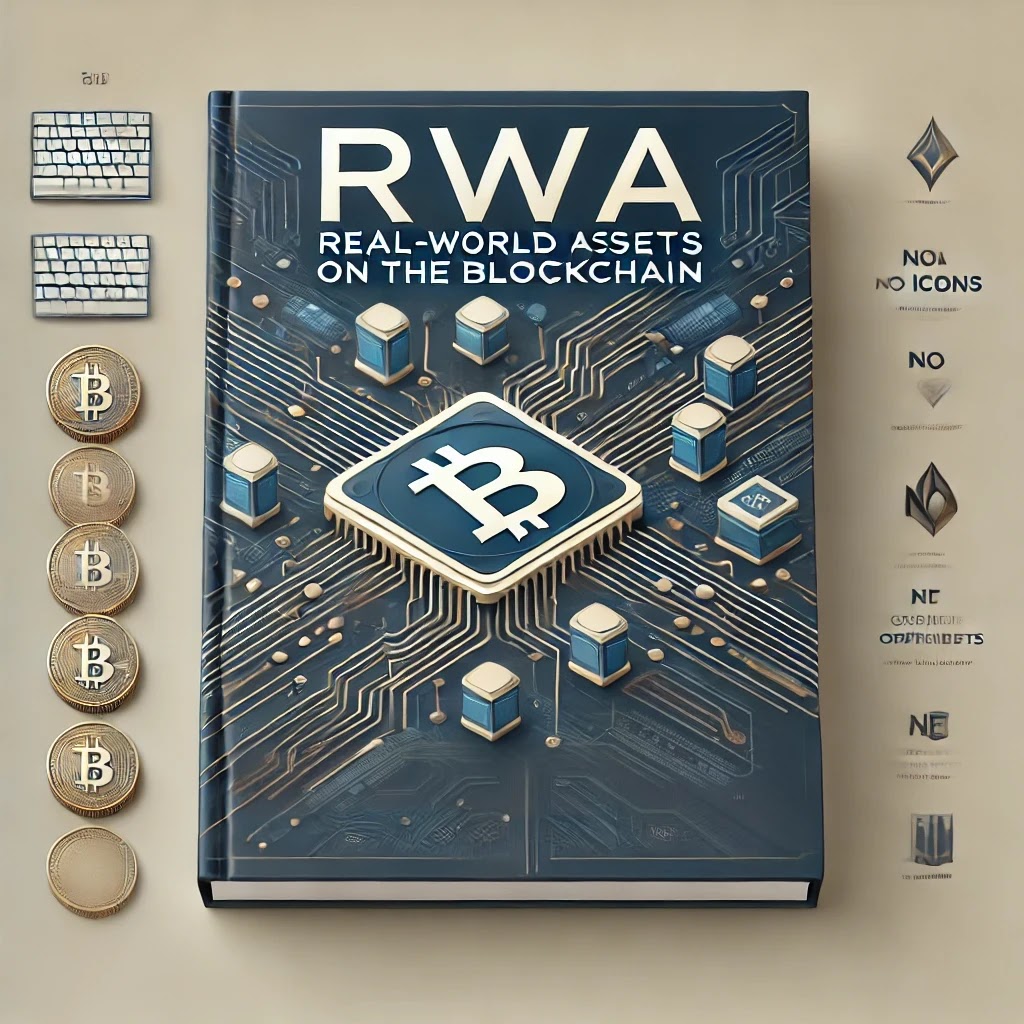
Real World Asset on Blockchain 


If you've followed XRP for any length of time, you've probably heard the usual pitch: it's fast, cheap, and great for payments. 

And sure, that's true — XRP settles transactions in 3–5 seconds with near-zero fees. But if you think XRP's only value lies in cross-border remittances or bank settlements, you might be missing the bigger picture — and possibly the biggest catalyst for XRP's long-term growth.

In this deep dive, we'll break down how the tokenization of Real-World Assets (RWAs) on the XRP Ledger (XRPL) could fundamentally shift XRP’s market dynamics by reducing circulating supply, creating a built-in supply shock, and redefining its utility far beyond payments. 

We’re not just talking about bullish speculation — we're talking about structural change.

Let’s explore the mechanics, the implications, and why the tokenization narrative could be the most important story in XRP’s evolution.

What Is Tokenization?

At its core, tokenization is the process of converting rights to a real-world asset — like real estate, gold, stocks, bonds, or private credit — into a digital token that exists on a blockchain.

These tokenized assets are:

  • Programmable: Smart contracts can embed rules, automate transactions, and enforce compliance.

  • Globally tradable: Anyone with internet access can participate in markets once limited to institutional investors.

  • Highly liquid: With 24/7 markets, fractional ownership, and minimal transaction costs.

  • Fast and cheap to settle: Especially on XRPL, where transactions cost ~$0.0002 and confirm in seconds.

Imagine a logistics company tokenizing its warehouse facility into 10 million WARE tokens. Investors could purchase fractional shares and earn income from leasing revenue, all in a decentralized, globally accessible market.

Create Buy Sell  Tokenize 


The XRP Ledger (XRPL) as the Foundation for Tokenization

So why is XRPL suited for tokenization?

XRPL is a decentralized, open-source blockchain that supports:

  • Native token issuance

  • Automated Market Makers (AMMs)

  • Smart contract-like logic (Hooks, coming soon)

  • Stablecoins (like RLUSD)

  • Built-in decentralized exchange (DEX)

  • Nearly instant settlement

With these capabilities, XRPL isn’t just enabling payments — it’s building a full financial ecosystem.

The points mentioned about XRPL's role in RWA tokenization are validated by real-world developments:

  • XRPL is being actively explored and utilized for RWA tokenization. Companies like Archax and BlocScale are already working on bringing tokenized assets such as real estate and commodities to the XRPL.

  • Ripple is actively promoting XRPL for RWA tokenization. Ripple executives and spokespeople have publicly emphasized XRPL as a strong candidate for tokenizing trillions in real-world assets.

  • XRPL's advantages, such as low transaction costs, near-instant settlement, and built-in token support, are repeatedly mentioned by experts and developers in the space.

  • The use cases outlined in this article, like tokenized real estate and commodities, are not hypothetical — they are already being developed and tested through partnerships like Ripple and Archax.

  • The market for RWA tokenization is projected to grow significantly. The article's mention of a multi-trillion dollar market is consistent with projections by Ripple and Boston Consulting Group (BCG).

  • XRP’s role in liquidity and collateral is valid, given its function as a bridge asset and its evolving DeFi applications.

  • Locking of XRP in AMMs, lending protocols, and reserves is a logical outcome, potentially leading to a systemic supply reduction over time


  • Real-World Asset Tokenization: The Mechanism

Let’s look at how XRP gets locked up in three primary ways during tokenization:

1. Liquidity Pools (AMMs)

To trade tokenized assets like WARE tokens (from our warehouse example), users deposit XRP and the tokenized asset into a liquidity pool. That XRP remains locked in the smart contract, often for extended periods.

Example:( Note : the following “WARE token mentioned is an example- Not related to any existing Ware Token ,Brand or product ) 

  • A logistics facility is valued at $8 million and tokenized into 10 million WARE tokens.

  • A liquidity pool is created with $500K worth of liquidity.

  • XRP and WARE tokens are deposited to form the trading pair.

  • As users like Daniel exchange XRP for WARE tokens, the XRP enters the pool and stays locked there.

Multiply this by thousands of similar industrial assets, and the amount of locked XRP becomes significant.

2. Lending Collateral

Users can lock XRP as collateral to borrow other assets — like stablecoins (RLUSD) or tokenized corporate bonds.

Even if RLUSD becomes the dominant lending pair, XRP’s role as pristine collateral remains. Smart contracts require XRP to stay locked until the loan is repaid, again pulling supply off the market.

This point is strongly supported by XRP’s function as a bridge asset and recent developments in DeFi features on XRPL.

3. Reserves for Accounts and Trust Lines

To interact with any tokenized asset on XRPL, a user must:

  • Lock 1 XRP per account

  • Lock 0.2 XRP per trust line (each token they interact with)

While this seems small, it adds up quickly when scaled across millions of users.


The Supply Shock Effect

Let’s zoom out to understand the macro impact.

Ripple projects $6 trillion in tokenized assets by 2025. If XRPL captures even 10% of this ($600B), XRP lock-up could look like this:

  • 14.6 billion XRP in AMMs

  • 2.9 billion XRP in lending

  • 20 million XRP in reserves

That’s 17.58 billion XRP locked — about 30% of all circulating XRP.

And by 2033, with a projected $18.9T in tokenized assets and a 15% XRPL share, lock-up could hit 28.37 billion XRP — nearly 50% of circulating supply.

This projected market size is in line with reports from Ripple and Boston Consulting Group (BCG), which forecast significant growth in asset tokenization.

Why This Matters:

This isn’t a one-time burn. It’s an ongoing, systemic supply reduction built into how the ecosystem operates. It’s the classic supply/demand dynamic — if demand holds or increases while supply drops, price pressure builds.

Unlike speculation-based crypto projects, XRP’s supply constraints would be functionally tied to utility.


XRP vs. Other Tokenization Platforms

XRP isn’t the only game in town. Ethereum, Avalanche, Polygon, and others are exploring tokenization too. But XRPL’s unique advantages make it stand out:

  • Near-instant settlement

  • Ultra-low fees

  • Built-in DEX and AMM support

  • Native token features (no smart contract required)

  • High scalability and energy efficiency

These features make XRPL a compelling platform for institutions seeking efficient, reliable infrastructure for asset tokenization.

Ripple’s ongoing engagement with regulators and institutions gives it an added edge, especially in sectors like real estate, finance, and commodities.


Real-World Use Cases

Let’s walk through some practical applications.

 Commercial Real Estate:

  • Tokenize office buildings or logistics centers

  • Enable fractional ownership and lease-based income

  • Increase market access for smaller investors

 Private Credit & Loans:

  • Convert private debt into tradable tokens

  • Increase liquidity for otherwise illiquid assets

Stablecoins & CBDCs:

  • Use XRP as collateral to mint RLUSD or other stablecoins

  • Tokenized fiat currencies on XRPL for global transactions

Commodities:

  • Tokenize metals, energy resources, or agricultural products

  • Enable 24/7 trading, hedging, and custody options

Bonds & Securities:

  • Tokenized treasuries or corporate bonds for global investors

  • Real-time settlement and secondary market liquidity

Each of these use cases brings new assets and liquidity into the XRPL ecosystem — and with it, more XRP gets locked up.


Criticisms and Challenges

Of course, there are some concerns worth addressing:

1. Adoption Uncertainty

  • Will institutions really choose XRPL over Ethereum or private chains?

  • Ripple must continue proving its value to enterprise players.

2. Regulatory Hurdles

  • Tokenized assets fall under securities laws in many jurisdictions.

  • Regulatory clarity, especially in the U.S., remains a work in progress.

3. Technical and Market Risks

  • XRPL must remain competitive in terms of speed, cost, and security.

  • Competition from emerging Layer 1s and L2s is fierce.

4. Speculative Behavior

  • Retail investors chasing short-term price movements may ignore fundamental growth.

  • Price volatility could deter institutional interest.

Despite these concerns, the groundwork is being laid. Ripple’s partnerships, legal battles, and roadmap suggest a clear intent to lead in tokenized finance.

The Bottom Line: Why Tokenization Changes the Game

Here’s the fundamental shift:

  • XRP isn’t just a bridge asset for payments.

  • It becomes the infrastructure for digitizing global value.

Every tokenized warehouse, bond, or commodity requires:

  • AMM liquidity pools → XRP locked

  • Collateral for loans → XRP locked

  • Account reserves → XRP locked

This isn’t just demand — it’s demand that removes XRP from circulation.

It’s supply shock in slow motion.

The more the ecosystem grows, the tighter the supply. The tighter the supply, the higher the pressure. And the higher the pressure, the closer we get to what some might call XRP’s “escape velocity.”

Tokenization isn’t just a use case. It’s the catalyst.

XRP’s price potential lies not in what’s spent, but in what’s locked away — permanently.

And that story? It’s only just beginning.


Disclaimer

This article is for informational and educational purposes only. It does not constitute financial, investment, or legal advice. Cryptocurrency investments are inherently risky and may result in significant losses. The views expressed are based on current industry developments and should not be interpreted as endorsements or guarantees of future performance.

XRP, RLUSD, and other digital assets mentioned may experience extreme volatility, and the regulatory landscape is evolving. Always conduct your own research and consult with a qualified financial advisor before making any investment decisions. Neither the author nor the publisher holds any responsibility for your financial decisions or outcomes based on this content.

Why Wealth Rewards Clarity

Getting Rich: It’s Easier Than They Make It Sound! What if getting rich isn’t complicated — just misunderstood? For decades, people have bee...